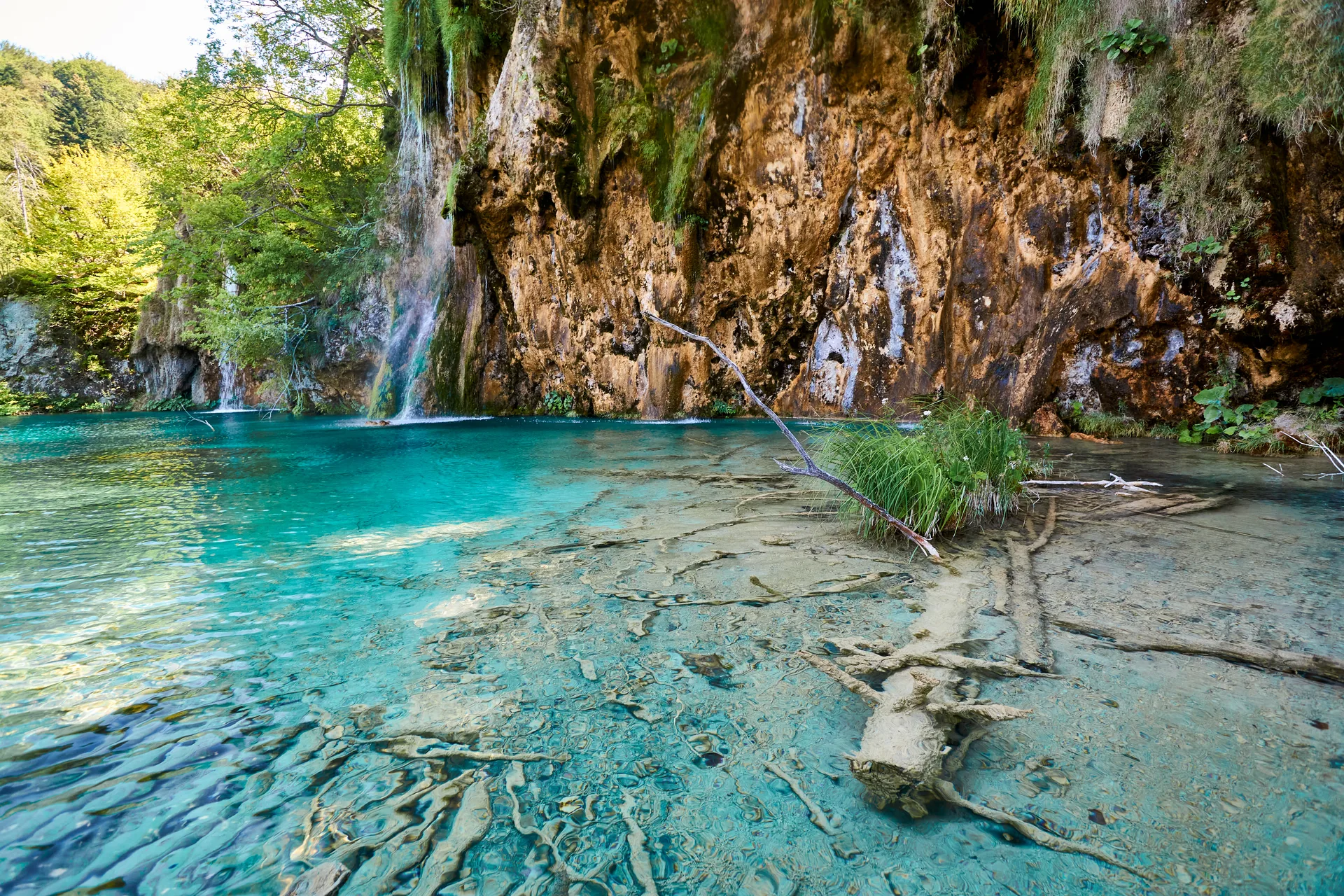
Plitvice Lakes National Park · Croatia
Sixteen Lakes, Falling Down a Valley
Croatia's oldest national park is a single wooded valley where sixteen turquoise lakes spill one into the next over ninety waterfalls — and eighteen kilometres of wooden boardwalk let you walk right across the pools and beneath the falls. Here's how to see it well: which route, which entrance, and how to be there without the crowds.
A park that builds itself
A park that builds itself
Waterfalls that are still under construction
Plitvice's magic isn't just that it's beautiful — it's that it's alive and still being made. The barriers that hold back the sixteen lakes are travertine: as mineral-rich water flows over moss and algae, it deposits calcium carbonate onto the plants, building natural dams that grow about a centimetre a year. The waterfalls you photograph are, quite literally, still under construction. This ongoing, living process is the reason UNESCO listed the park in 1979 — not just the scenery, but the geology making it.
A valley of turquoise steps
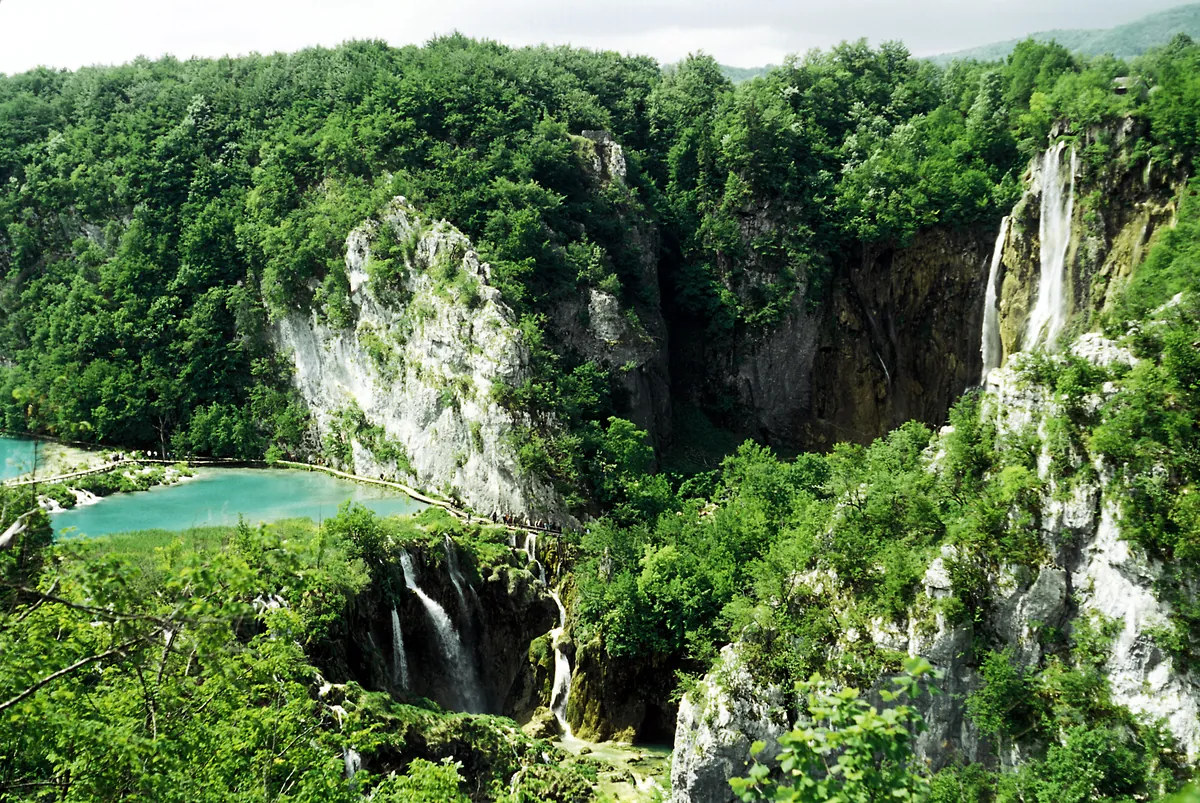
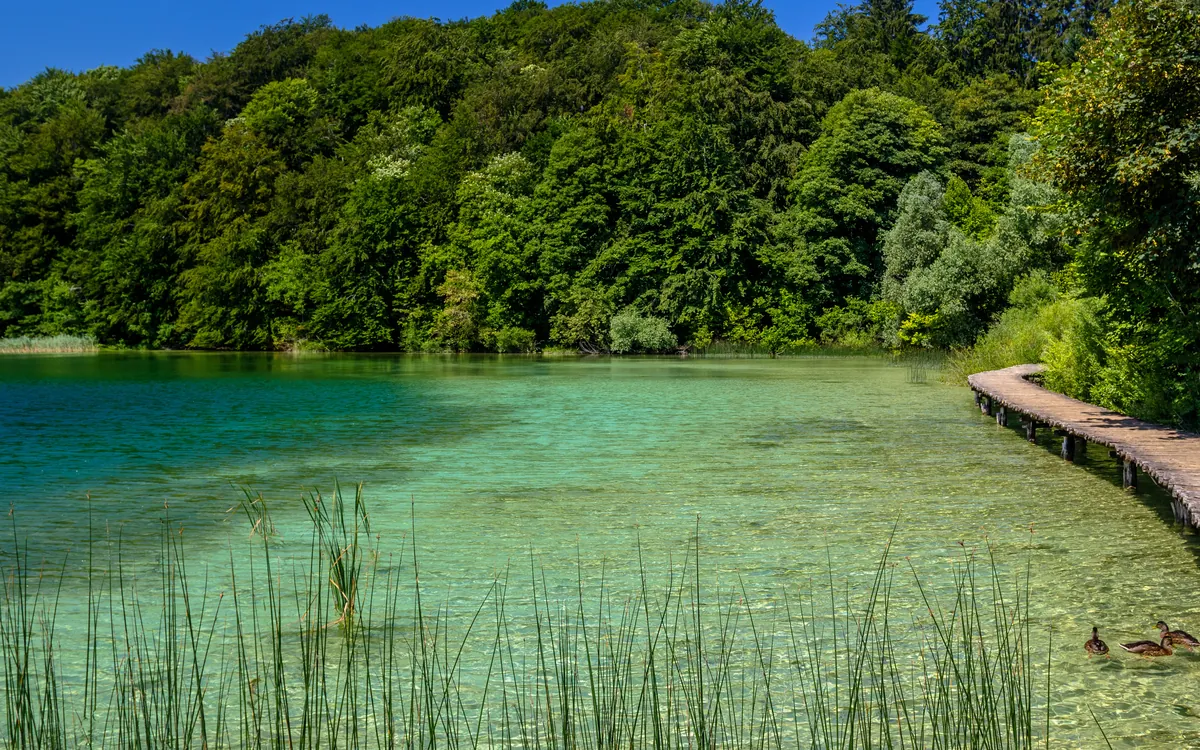
The result is a single stepped valley where sixteen lakes tumble one into the next, joined by more than ninety waterfalls and cascades. The water shifts hour by hour through azure, turquoise, green, grey and blue, depending on the minerals, the organisms and the angle of the sun. The lakes divide into two groups — the wider, forest-ringed Upper Lakes and the smaller Lower Lakes set in a dramatic limestone canyon — with the country's tallest waterfall at the bottom.
You walk through it, not past it
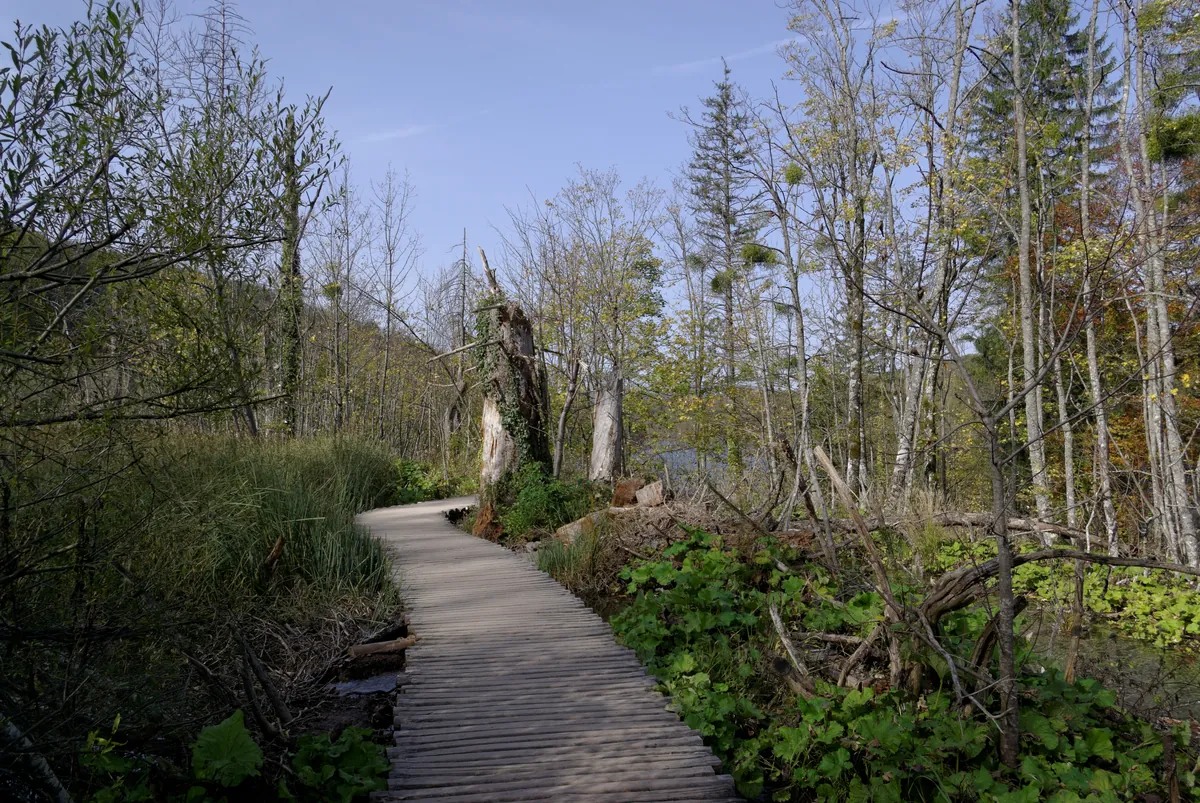
What makes Plitvice unlike other beauty spots is that you don't view it from a lookout — you walk through it. Eighteen kilometres of wooden boardwalk run directly across the pools and alongside, even beneath, the falling water, and a silent electric boat carries you across the largest lake. It's an immersive, walk-through park, which is also why it needs careful planning: the boardwalks are narrow, often one-way, and at midday in summer they fill up.
the shape of the day
Down the terraces
The classic full day follows the water downhill, from the wide Upper Lakes, across the big lake by boat, and down through the canyon of the Lower Lakes to the Great Waterfall. Here's the descent.
-
The Upper Lakes
The larger group: twelve wider lakes set on softer rock, ringed by thick forest, linked by boardwalks that wind between them over gentle travertine steps. This is the calmer, greener half of the park, and — if you start from the quieter Entrance 2 — the least crowded way to begin.
-
Across Lake Kozjak
Between the two lake groups lies Kozjak, the largest and deepest lake at around 47 metres, crossed by a silent battery-electric ferry (fumes would harm the water). The short crossing is a pause in the walking and one of the loveliest stretches of the day — included, like the shuttle, in your park ticket.
-
The Lower Lakes canyon
Below Kozjak the valley narrows into a limestone canyon holding the four Lower Lakes and the park's most dramatic waterfalls, the boardwalks threading right through the spray. It's shorter than the Upper Lakes but more concentrated — cascade after cascade in a tight, green gorge.
-
Veliki Slap
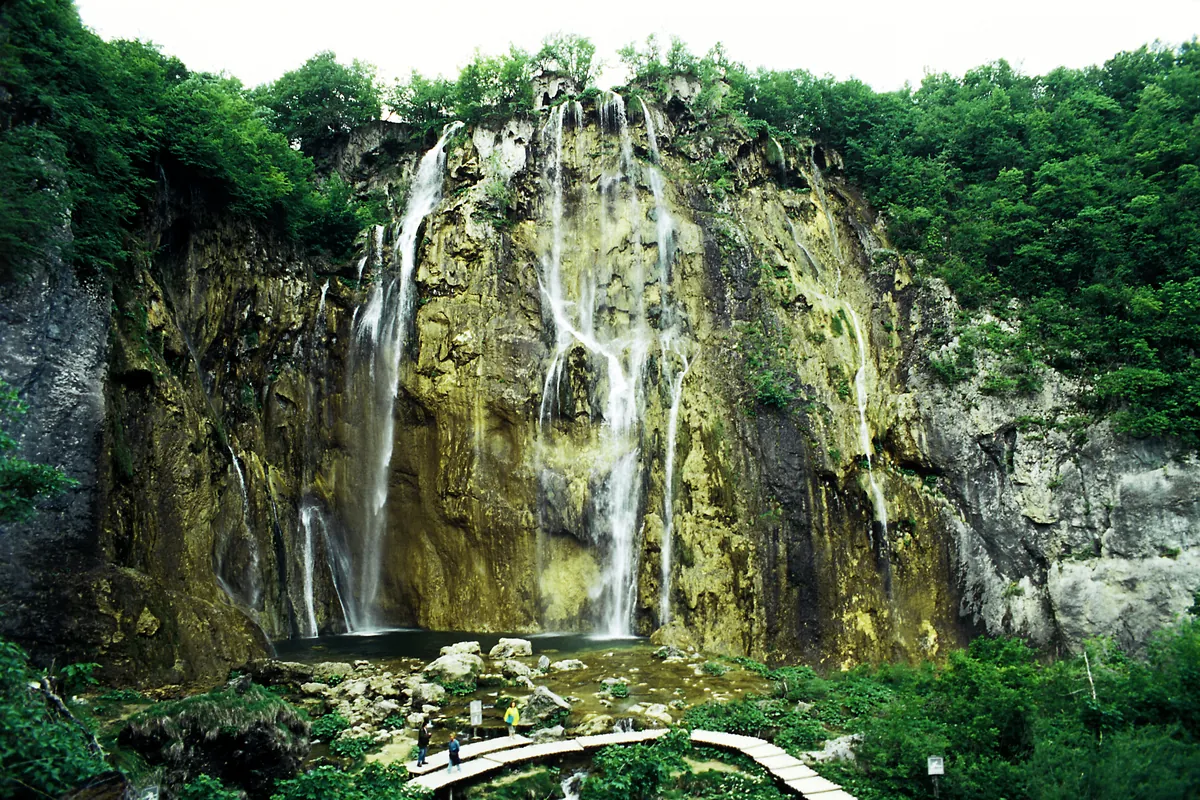
The descent ends at the Great Waterfall, Veliki Slap, which drops about 78 metres — the tallest in Croatia — into the canyon at the foot of the Lower Lakes. It's the park's signature image and the natural full stop to a day spent walking down the water.
Which walking route?
The park's walking routes
The park is walked as lettered programmes — each a set loop of a given length. Pick your letter before you go.
| Route | Entrance | Distance | Time | Covers |
|---|---|---|---|---|
| A | 1 | ~3.5 km | 2–3 h | Lower Lakes + Veliki Slap — the highlights reel |
| B | 1 | ~4 km | 3–4 h | Lower Lakes + the Kozjak boat |
| C | 1 | ~8 km | 4–6 h | Both lake groups — the popular full loop |
| E | 2 | ~4.3 km | 2–3 h | Upper Lakes only, from the quieter entrance |
| H | 2 | ~8.9 km | 4–6 h | Both lake groups, Entrance-2 version of C |
| K | 1 or 2 | ~18.3 km | 6–8 h | The entire park on foot |
before you book
The timed-ticket trap
Plitvice's one genuine hazard isn't the walking — it's getting in. Understanding the ticketing is what separates a great day from a frustrating one.
Entry is by timed hourly slot
You don't just buy a ticket, you book a specific entry hour, because the park caps arrivals at about 300 people per hour per entrance to protect the boardwalks. In June to September the popular 8–10 a.m. slots sell out days or weeks ahead as tour agencies block-book them. This is the single most important thing to plan around.
The 'cheap tour' gotcha
A tempting low headline price is often a transport-only tour that does not include the park ticket — so you still have to secure your own scarce timed slot, and pay the roughly €40 summer entry on top. A tour that includes the timed entry costs more up front but removes exactly the friction that ruins day trips. Always check whether entry is included before you compare prices.
No swimming, anywhere
Swimming has been banned in every lake, river and waterfall since 2006, and it's strictly enforced with fines. The travertine barriers are built by living organisms and human contact damages the fragile, actively-forming ecosystem. Come expecting a look-don't-touch park — the turquoise water is to be walked beside, not swum in.
Beat the midday crush
The boardwalks are narrow and largely one-directional, so from about 10 a.m. to 2 p.m. in summer they become slow, shoulder-to-shoulder walking. The fix is timing: arrive before 10 a.m. or enter in the late afternoon, and start from the quieter Entrance 2 if you can. A good tour is built around these windows; if you go independently, plan for them.
What you'll walk past
What you'll walk past
A full day at Plitvice threads together a handful of distinct sights along the boardwalks. Here's what each one is.
The Great Waterfall
At around 78 metres, the tallest waterfall in Croatia, plunging into the canyon at the foot of the Lower Lakes. The boardwalk brings you close enough to feel the spray, and it's the park's defining photograph — the natural climax of the walk down the valley.
The wide green lakes
Twelve broader lakes on softer dolomite rock, ringed by forest and joined by gentle travertine cascades. Calmer and greener than the Lower Lakes, and the least crowded stretch if you begin from Entrance 2 — the contemplative half of the park.
The canyon cascades
Four smaller lakes set in a steep limestone canyon, holding the park's most dramatic waterfalls with the boardwalks threading right through them. Short but intense — a tight green gorge of falling water leading down to Veliki Slap.
The electric-boat crossing
The largest and deepest lake, about 47 metres deep, crossed by a silent battery-electric ferry between the two lake groups. The crossing is a restful pause in a day of walking, and one of the prettiest parts of the visit — included in your ticket.
The self-building dams
The barriers between the lakes are living travertine, growing about a centimetre a year as calcium carbonate builds up on moss and algae. Look closely at the cascade edges and you're watching geology in slow motion — the reason the park is World Heritage listed.
Bears, wolves and lynx
The forests around the lakes are one of Europe's more intact large-carnivore habitats — home to brown bears, grey wolves and Eurasian lynx, plus deer, otters and some 168 bird species. You're very unlikely to see the big predators, but you're walking through their country.
when to go
When to go
Plitvice is open all year, but the season changes the water, the crowds and the price dramatically.
Spring (Apr–Jun)
Snowmelt drives the waterfalls to their fullest and the forest fills with wildflowers, with milder crowds than high summer and shoulder-season ticket prices into May. Late spring — May and June — is one of the two sweet spots for the park: strong water, good weather, and boardwalks you can actually move on.
Summer (Jul–Aug)
The busiest, hottest and most expensive time. The lakes are stunning but the boardwalks are crowded from mid-morning, timed slots sell out well ahead, and the peak €40 ticket applies. If you must come in summer, book an entry-included tour, take an early or late slot, and start from the quieter entrance.
Autumn (Sep–Oct)
The other sweet spot, and many visitors' favourite. September keeps the warmth with thinner crowds; October brings electric foliage colour across the forested slopes, reflected in the turquoise water, with cheaper shoulder-season tickets. For colour and calm together, autumn is hard to beat.
Winter (Nov–Mar)
Near-solitude, a snow-and-ice landscape and the cheapest tickets of the year — but shorter opening hours, and some trails and the boat can close in snow and ice. It's a quieter, starker, more magical Plitvice for those who don't mind the cold and the reduced access; check current conditions before you go.
Day trip, or stay nearby?
Day trip, or stay nearby?
Where you set out from shapes the day as much as which route you walk. From Split it's a big day on the road; the alternatives are gentler.
The long, popular day
A guided day trip from Split is the most common way people see Plitvice, and it works — round-trip coach transfer, a guide, often the timed entry included, and free time to walk a route. The catch is the distance: two and a half to three hours each way, so roughly half of a twelve-hour day is spent travelling, and you arrive with the mid-morning crowds. Fine if Split is your base and you can't restructure the trip.
The calmer alternative
Zadar is only about 1.5 to 2 hours away and makes a far shorter day; better still, staying a night near the park lets you be at the gate early, ahead of the buses, when the boardwalks are quiet and the light is soft. If Plitvice is a highlight of your Croatia trip rather than a tick-box, basing yourself closer — or overnighting nearby — is the more rewarding way to do it.
Plitvice, in pictures
Plitvice, in pictures
Plitvice Lakes day trips
Find a Plitvice day for your dates
Every tour below is bookable through GetYourGuide, with live availability and the final price shown in your own currency before you pay — the ones that include your timed park entry take away the hardest part of a summer visit.
Planning your visit
Planning your visit
Pick your route first
Decide your route before you go, because it sets the shape of the day. For one day covering everything, Route C (from Entrance 1) or Route H (from the quieter Entrance 2) links both lake groups with the Kozjak boat over four to six hours. Short on time or energy, Route A — the Lower Lakes and Veliki Slap in two to three hours — is the highlights reel. The routes are lettered and signposted; know your letter.
Choose your entrance
There are two entrances. Entrance 1 sits at the Lower Lakes and is where most tour buses unload, so it's busier; Entrance 2, at the Upper Lakes, is generally quieter. If you can choose, starting from Entrance 2 and walking against the main flow is a simple way to dodge the worst of the congestion, especially in summer.
Sort the timed ticket
Entry is by timed hourly slot, capped at about 300 people per hour per entrance, and summer mornings sell out well ahead. The simplest solution is a tour that includes your timed entry — it removes the scramble entirely. If you go independently, book your slot online days or weeks in advance for June to September, and consider a late-afternoon entry, which is cheaper and quieter.
Getting there
Plitvice sits inland between Zagreb and the coast. It's about 2.5 to 3 hours each way from Split, roughly 2 hours from Zagreb, and only 1.5 to 2 hours from Zadar — the closest major base. A guided day trip removes the driving and parking and often bundles the ticket, which is why it's the easy choice for car-free travellers; drivers who want to beat the crowds often stay overnight nearby instead.
What to bring
Comfortable walking shoes for several hours on boardwalks and trails, layers and a rain jacket (the canyon holds its own weather), water and snacks, sun protection, and a camera. Remember there's no swimming, and leave the drone at home — they're banned, with confiscation and fines. Dogs are welcome on a lead, including on the boat and shuttle.
Planning a Plitvice visit
Planning a Plitvice visit
Plitvice Walking Routes Explained: A, C, H and the Rest
The park's lettered routes, decoded — which one to walk for the time you have, and which entrance to start from.
Read more →BEAT THE QUEUEPlitvice Timed Tickets and How to Avoid the Crowds
The hourly cap, the summer sell-outs and the entry-included tours — how to actually get in, and get the boardwalks to yourself.
Read more →THE SCIENCEHow the Plitvice Lakes Formed — and Still Are
The living travertine dams that build the lakes a centimetre a year — the geology behind the turquoise, and why UNESCO listed it.
Read more →GETTING THEREPlitvice from Split, Zadar or Zagreb: Which Base?
The park sits inland between the coast and the capital — how far it is from each hub, and which makes the best day.
Read more →WHEN TO GOThe Best Time to Visit Plitvice Lakes
Fullest falls, best colour, fewest people or cheapest tickets — the four seasons at Plitvice, compared.
Read more →THE VISITA Day at Plitvice Lakes: What to Expect
How the day fits together — the boardwalks, the boat, the crowds and the Great Waterfall, in the order you'll meet them.
Read more →questions
Plitvice questions
Which walking route and entrance should I choose?
For one day that sees everything, take Route C from Entrance 1 or Route H from Entrance 2 — both link the Upper and Lower Lakes with the scenic Kozjak boat crossing, over about four to six hours. If you're short on time or energy, Route A covers the Lower Lakes and the Great Waterfall in two to three hours — the highlights reel. Entrance 2, at the Upper Lakes, is generally quieter, because most tour buses unload at Entrance 1; starting there and walking against the flow helps you avoid the worst crowds.
Do I need to book a timed ticket, and will a tour include it?
Yes — entry is by timed hourly slot, capped at about 300 people per hour per entrance, and in June to September the popular morning slots sell out days or weeks ahead. Many GetYourGuide tours include your timed entry, which removes the hardest part of a summer visit; others are transport-only, and a low headline price often means you still have to secure your own scarce slot and pay the roughly €40 peak-season ticket on top. Always check whether entry is included before comparing prices.
Can you swim in the lakes?
No. Swimming has been banned in every lake, river and waterfall since 2006, and it's strictly enforced with fines. The turquoise barriers between the lakes are built by living organisms and are extremely fragile, so human contact damages the actively-forming ecosystem. Plitvice is a look-don't-touch park — you walk beside and above the water on boardwalks, but you don't get in it. Drones are also banned, with confiscation and significant fines.
Is a day trip from Split worth it?
The park itself is absolutely worth seeing — but from Split it's a long day, around a twelve-hour tour with five to six hours of driving, and you tend to arrive with the midday crowds. It's a fair choice if Split is your base and you can't restructure your trip, and an included-entry tour makes it far smoother. If you have flexibility, Zadar is much closer (1.5 to 2 hours), and staying a night near the park to arrive early is the most rewarding way to see it.
When is the best time to visit Plitvice?
May, June, September and October are the sweet spots — good weather, strong waterfalls, more manageable crowds and cheaper shoulder-season tickets. Spring brings the fullest, snowmelt-powered falls; October brings spectacular autumn colour reflected in the turquoise water. Summer is the most crowded, hottest and priciest, with slots selling out and busy boardwalks. Winter offers near-solitude, snow and the cheapest tickets, but shorter hours and possible trail and boat closures — check conditions before you go.